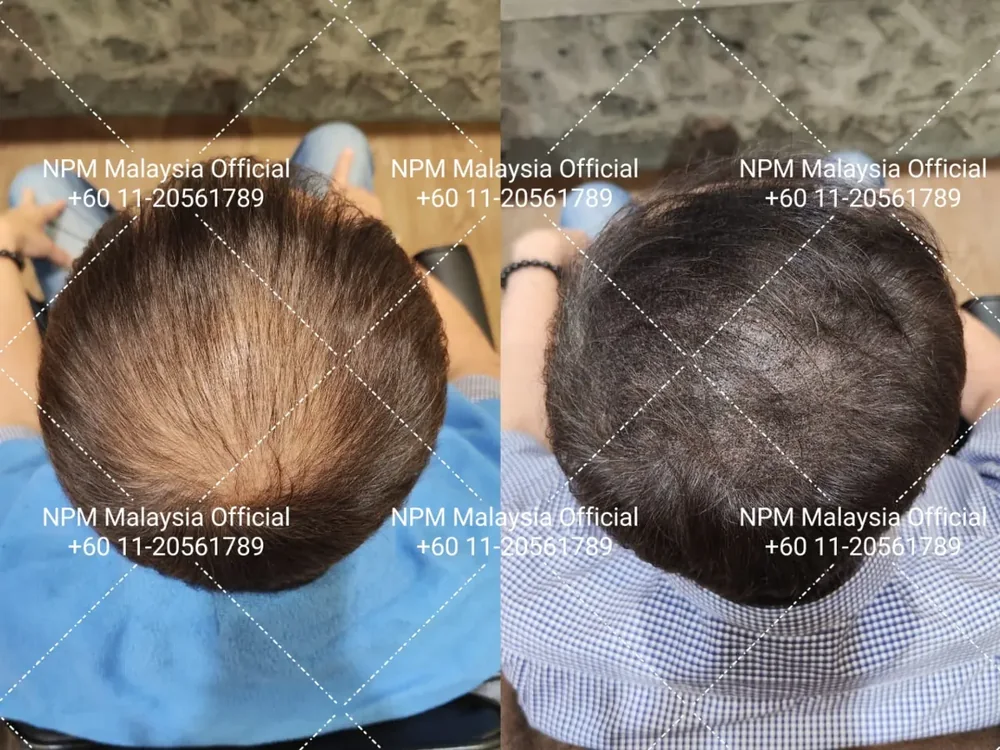
For many women, thinning shows as a widening part rather than bald patches. Simulation & Stimulation can make the parting look fuller on the day and adds a scalp-care routine. If the change was sudden, or comes with irregular periods, acne or tiredness, see a doctor first, because hormones, iron or thyroid can be involved.
Why a widening part is common
Female pattern thinning usually keeps the front hairline and thins the top, so the parting looks wider over time. Reviews of pattern hair loss describe this pattern well, and it often starts gradually.
Hair can also thin after childbirth, illness, crash dieting or stress. These causes behave differently, which is why we ask about your history first.
What the session can do
The simulation half targets how dense the parting looks. The stimulation half focuses on scalp care and a routine you can keep. You see the look in the mirror before you leave.
It does not change the cause of thinning. How long the look lasts varies by person, and we explain this honestly at your scalp check.
Comfort and privacy
Tell us if you prefer a female therapist, wear a tudung, or would like a private room. We plan around you.
Bring a photo of how you usually style your parting. It helps us match the result to how you wear your hair.
Questions
Should I see a doctor first?
Yes, if thinning was sudden, patchy, or comes with other symptoms. A blood test can rule out common causes.
Can I keep my usual parting?
Usually yes. Tell your therapist how you style it so the plan follows that.
Studies mentioned
These studies looked at ingredients or general approaches. None of them tested our treatments or products, so they are background, not proof.
- Lolli F et al. (2017). Androgenetic alopecia: a review. Endocrine 57(1):9-17.Systematic review. Androgenetic alopecia is a polygenic condition in which androgens cause progressive miniaturisation of genetically susceptible follicles.PubMed 28349362doi:10.1007/s12020-017-1280-y