Great hair starts at the scalp. Yet most routines are designed around the hair shaft: shampoo, conditioner, styling. A scalp care routine flips the focus to the skin your hair grows from. The good news is that it does not need to be complicated. It needs to be consistent, matched to your goals, and based on what research actually supports.
Why the scalp matters
The scalp is skin with an unusually dense population of hair follicles. When it is irritated, flaky or inflamed, hair suffers. Over 20 epidemiological studies associate abnormal scalp conditions with impaired hair, and a treatment study showed those effects on hair were reversible once the scalp was normalised. Scientists describe oxidative stress as the mechanism linking an unhealthy scalp to poorer hair growth and retention.
So a scalp routine is not a luxury. It is the foundation.
Step 1: Know your goal
Before choosing products, decide what you are trying to achieve:
- Comfort and hydration: dryness, tightness, itch or sensitivity.
- Balance: oiliness, flaking or dandruff.
- Thinning or pattern hair loss: a gradual reduction in density, a widening part or a receding hairline.
- Excess shedding: sudden, diffuse hair fall, often two to four months after a trigger such as illness, childbirth or major stress.
Sudden patchy loss, scarring, pain or significant redness are reasons to see a doctor first.
Step 2: Cleanse often enough
Many people under-wash because they fear washing will make hair fall out. Research says otherwise. In a study of Asian populations, washing five to six times a week gave the best overall scalp and hair satisfaction, and daily washing outperformed weekly washing with no detrimental effects.
Hairs released during washing are mostly resting (telogen) hairs that had already reached the end of their cycle; clinicians even count them in a standardised hair-wash test.
If you have dandruff, use an anti-dandruff shampoo. Dandruff is linked to Malassezia yeasts and responds to treatments that inhibit them, and improving dandruff has been shown to reduce scalp oxidative stress and improve the quality of hair grown afterwards.
Step 3: Hydrate the scalp, not just the hair
Conditioners are formulated for the hair shaft. The scalp needs its own lightweight hydration. Hyaluronic acid is a well-tolerated, hygroscopic ingredient supported by multiple clinical studies for skin hydration, which makes it a natural choice for a scalp hydrator.
Apply hydrating products to clean, dry scalp, section by section, and massage in.
Step 4: Add a targeted treatment for thinning
A meta-analysis of randomised trials found it superior to placebo in both sexes.
To get the most from a minoxidil product:
- Apply to a dry scalp, directly on thinning areas, then wash your hands.
- Be consistent. Results may take two months, and some people need four months or longer.
- Expect possible early shedding. A temporary increase in shedding can occur in the first weeks and is not a reason to stop.
- Keep going. Continued use is needed to keep results.
- Know when to pause. Stop and see a doctor if you experience chest pain, rapid heartbeat, dizziness, swelling or persistent scalp irritation. Do not use it if you are pregnant or breastfeeding.
Step 5: Layer products in the right order
A simple layering principle: treatment first, on a dry scalp; hydration and styling after it has absorbed. If you use a minoxidil product and a scalp gel, apply them at different times of day if possible, or follow your product instructions carefully so each one can do its job.
Step 6: Massage
Massage helps distribute products and is a pleasant habit. In a small study of nine healthy men, four minutes of standardised scalp massage daily for 24 weeks was associated with increased hair thickness. These are small or self-reported studies, so think of massage as a supporting habit, not a treatment.
Step 7: Protect against the sun
UV radiation is the most frequent cause of structural damage to the hair shaft: UVB degrades hair proteins and UVA changes colour. Solar radiation can reduce hair strength, lustre and protein content. A hat or shade during the strongest midday sun protects both scalp and hair.
Step 8: Support from within
Hair is built from what you eat. Iron, zinc, vitamin D and B vitamins all play roles in the hair follicle cycle, and deficiency may be a modifiable risk factor for hair loss. If you suspect a deficiency, ask your doctor for a blood test before supplementing.
Be cautious with megadoses. Supplements without a documented deficiency have unproven benefit, and some may worsen hair loss. Biotin is a good example: reported benefits occur in people with an underlying deficiency, and high-dose biotin can distort common blood tests, including thyroid tests. Tell your doctor if you take it.
Lifestyle matters too. In a population study of Asian men, smoking was significantly associated with more severe pattern hair loss.
Track progress the smart way
Hair grows in cycles that span months to years, so daily mirror checks will only frustrate you. Take photos in the same light, from the same angles, once a month. Judge a hair-loss treatment after at least four months of consistent use.
Where Folli fits
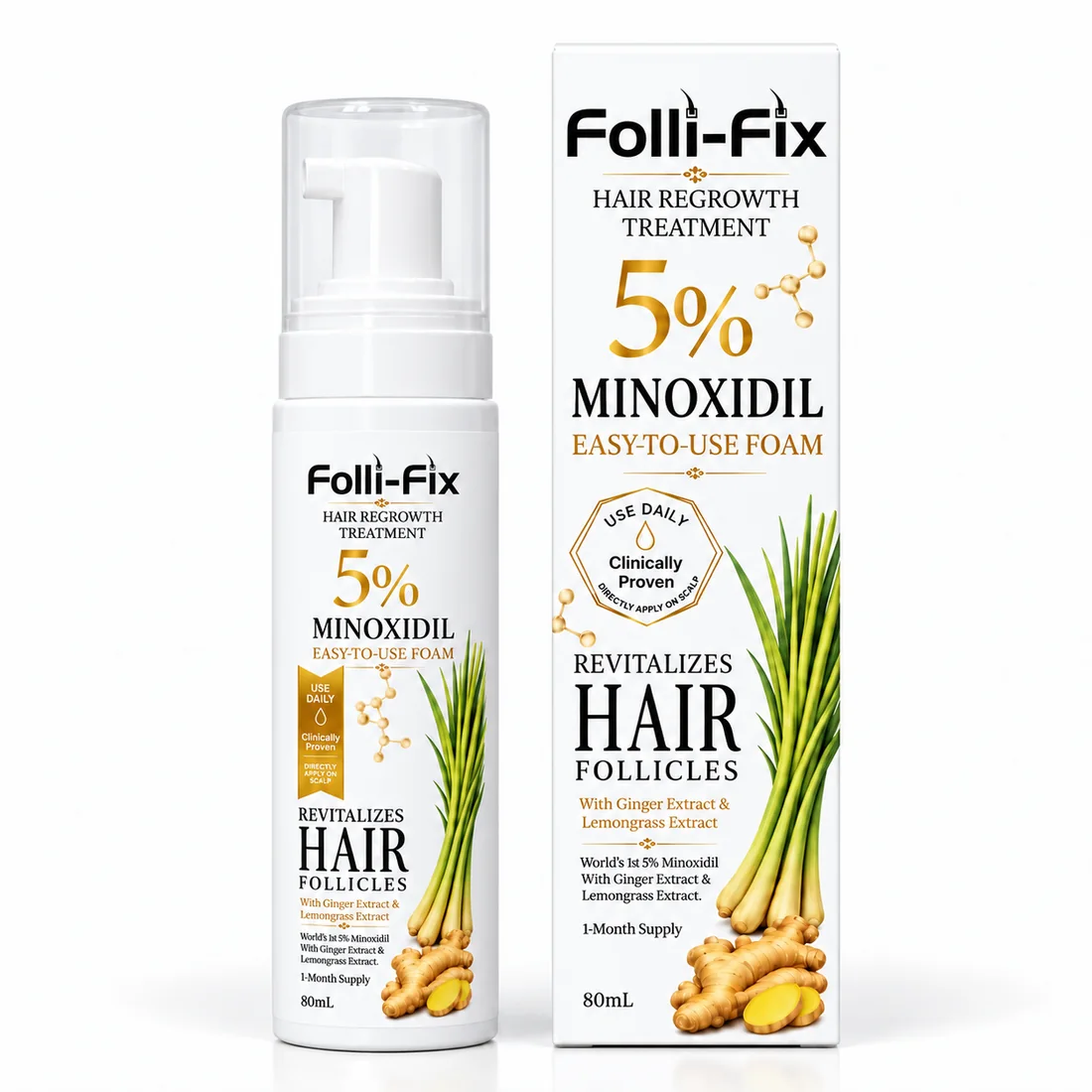
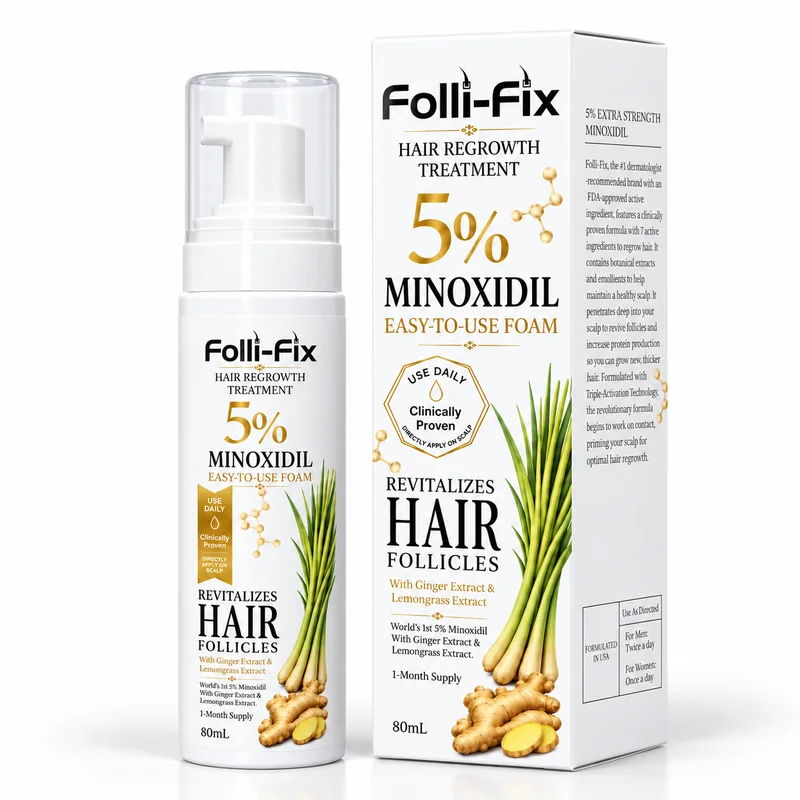
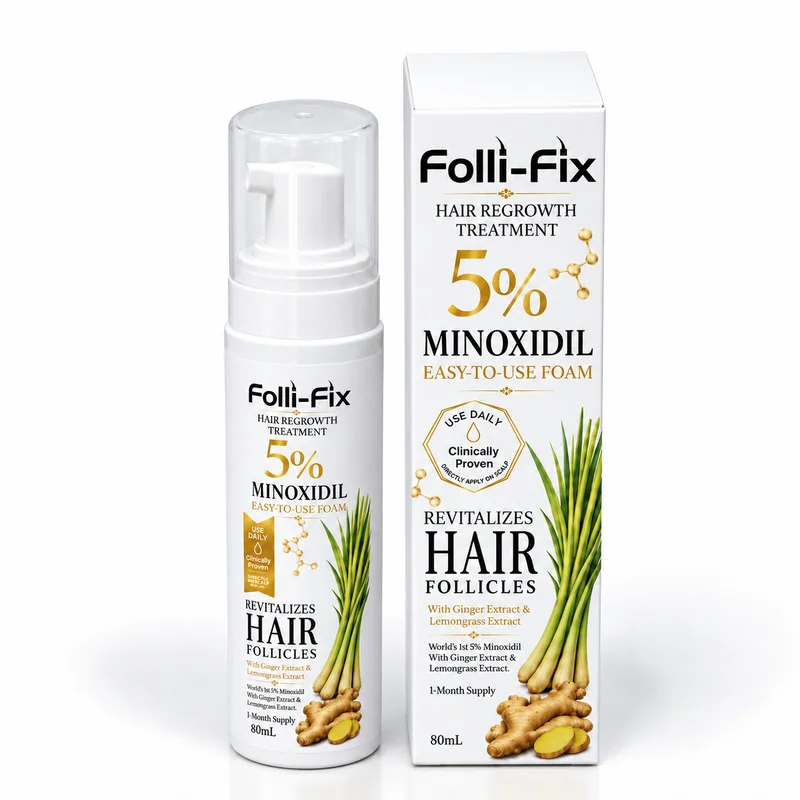
Folli-Fix (foam, for men and women) and Folli-Fix X10 (liquid, for adult men) are our minoxidil treatments; use one or the other on a given area, not both. Folli-Care is our hyaluronic-acid scalp hydrator. Folli-Fuel is a professional in-centre treatment delivered by our experienced team. Ask us to help you choose a routine that suits your scalp and goals.
How often should I wash my scalp?
Most people can wash often. Among Asian participants, five to six washes a week gave the best results, and daily washing outperformed weekly washing.
Does washing hair every day cause hair loss?
No. Daily washing showed no detrimental effects in a study of Asian populations, and hairs shed while washing are mostly resting hairs at the end of their cycle.
Should I apply minoxidil to a wet or dry scalp?
Dry. Apply minoxidil to a dry scalp on the thinning areas and wash your hands afterwards, as product directions advise.
Can I use a scalp serum with minoxidil?
Usually, yes, with good timing. Apply the minoxidil treatment to a dry scalp first, let it absorb, and follow each product's directions.
Does scalp massage help hair growth?
It may help a little. Small studies linked daily massage to thicker hair, but they were small or self-reported.
How long before a scalp routine shows results?
Comfort improves quickly; hair takes months. For minoxidil, results may take two to four months or more.
Do I need supplements for healthy hair?
Only if you are deficient. Correcting a deficiency matters, but supplementing without one has unproven benefit.